
You Have A First Amendment Right To Record ICE
Too bad they may murder you if you exercise it...
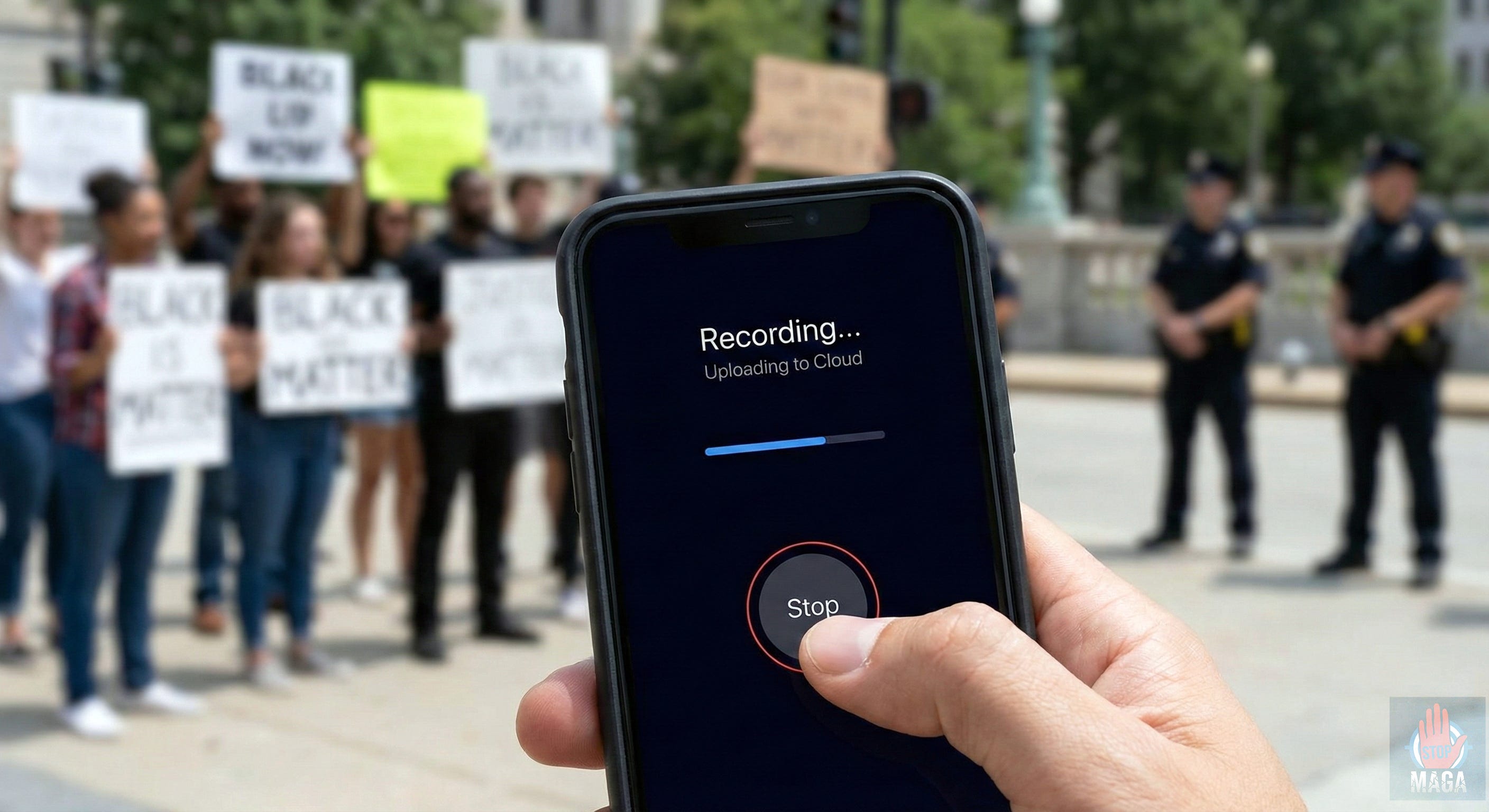
TL;DR: You have a First Amendment right to record law enforcement officers in public, which is a vital tool for accountability. However, protecting your digital data and personal safety is essential when documenting encounters with federal agents.
I watched the footage of the events last Saturday, and it is clearer than ever why bystander video is our most powerful weapon against the lies from Herr Trump and the narratives he has his minions selling on Trump-owned or co-opted media. Without those recordings, disproving the official accounts surrounding the death of Alex Pretti would be nearly impossible. Even then, the brainwashed MAGASHEEP watch the same videos you and I watch and come to the conclusion that supports their politics instead of the facts.
Given the proclivity for ICE Barbie (Noem) and her Gestapo to assault, kidnap, arrest and murder people who exercise that right, documenting a protest or an ICE arrest is an act of bravery. It obviously carries significant risks. Whether you are witnessing an arrest in your community or attending a demonstration, you need to know how to protect your technology and yourself before you hit record.
The First Amendment Is Your Shield
The law is clear: If you are legally allowed to be in a space, you are legally allowed to record law enforcement officers performing their duties. This is a protected First Amendment right.
Despite this, some agents act as if these rules do not apply to them. Recent footage from Maine shows agents actively trying to intimidate bystanders, proving that knowing your rights is only the first step—you also need to be prepared for the encounter. One of the government’s goons said “You raise your voice to me I will erase your voice.” Yeah - like that isn’t creepy.
How to Prepare Your Phone
Before you head out, I recommend taking these steps to ensure your data stays private even if your device is seized:
Disable Biometrics: Turn off FaceID and TouchID. Law enforcement can sometimes compel you to unlock a phone with your physical features, but they generally cannot force you to divulge a passcode.
Use a Strong Passcode: Ensure your phone is protected by a numeric or alphanumeric code that isn’t easily guessed.
Install Backup Apps: Use apps that automatically upload video to the cloud in real time. This ensures the footage survives even if the phone is damaged or confiscated.
Lock the Screen: Get into the habit of locking your screen immediately if an officer approaches you.
Get a Burner
It’s most safe to simply leave all your current smart devices (phone, tablet, watch, etc) at home and get yourself a cheap burner phone. This way if the government seizes the phone, you aren’t out anything you need day-to-day and their access to the rest of your critical data goes away.
You might also think about using smart glasses that do NOT connect to your phone - a GoPro or similar camera or a lapel camera. These are less noticeable to ICE and will help keep you a little bit safer.
Staying Safe on the Ground
Recording an encounter with ICE or federal agents requires a balance of persistence and caution.
Maintain Distance: Do not interfere with the agents’ movements. Stand far enough back that they cannot claim you are obstructing their work. Use telephoto lenses. This way you can get close up without getting CLOSE UP.
Narrate the Action: Clearly state what you are seeing into the camera. Mention the time, the location, and the badge numbers if they are visible. Also ask people around you to be sure to video any attempt by ICE to detain you.
Stay Calm: Avoid escalating the situation verbally. Your goal is to be an objective witness.
Expert Perspective
“It’s really important to start with the fact that individuals have a First Amendment right to record police officers and law enforcement. If you’re lawfully allowed to be somewhere, you are legally allowed to record law enforcement in the course of their duty.”
— Maria Villegas Bravo, counsel at the nonprofit Electronic Privacy Information Center
SIDEBAR
Best Apps & Practices For Recording Law Enforcement
I’ve looked into the best tools available right now for capturing evidence safely. If your phone is seized or damaged, having the video already in the cloud or in the hands of a legal team is the only way to ensure the truth survives.
Recommended Apps for Real-Time Security
OliveCast: I recommend this if you want to use your phone like a body cam. It allows you to record while your screen is off (which can de-escalate a situation by making the recording less obvious) and automatically syncs the footage to your personal Google Drive or Dropbox.
D.O.P.E. (De-escalating Officer Patrol Encounters): This app is excellent for families. It automatically sends your location and the video footage to a pre-selected list of emergency contacts the moment you start recording. It also includes built-in tips on how to interact with law enforcement safely.
Cop Watch: While a simpler tool, it is designed for speed. It can be set to start recording the moment the app is launched and pushes the data immediately to iCloud or other cloud services.
Secure Sharing and Storage
Once you have the footage, how you handle it matters.
Signal: For sharing sensitive video with journalists or activists, I only use Signal. Its end-to-end encryption ensures that no one—not even the service provider—can intercept the file.
Automatic Backup: If you aren’t using a dedicated activism app, ensure your phone’s native “Camera Upload” feature is active for Google Photos or iCloud. However, be aware that law enforcement can sometimes get warrants for these cloud providers more easily than they can for the ACLU.
Pro Tip: The “Power Off” Strategy
If you believe your phone is about to be seized, try to power it down completely. This forces the device into “Before First Unlock” (BFU) mode, which makes it significantly harder for forensic tools to bypass your passcode compared to a device that is simply locked.
CONCLUSION
If we do not take action to document the illegality and horrors of the Trump Regime then we won’t be able to prove them later. Think about it and if you can do so safely, consider jumping in and lending a hand - er a phone.
As the Trump regime continues to operate in a totally opaque manner and continues to promote xenophobic and racist agendas - moves to dismantle the civil service and deploy military forces for domestic enforcement - tries to make it harder for US citizens to vote - your silence effectively serves as a vote of confidence for this new direction. If the systematic erosion of democratic checks and balances doesn’t move you to act now, is this truly the version of America you want to leave behind?